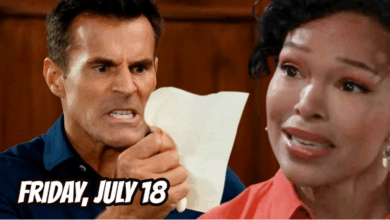
The Phone Ringtone Is Scout’s – Scout Saw Who Shot Drew! General Hospital Spoilers

The latest General Hospital storyline centers on the shocking shooting of Drew Kane and the chain of lies that ensnared Port Charles. Willow Tate has been wrongly accused and jailed, while the city wrestles with questions about motives and culpability. Central to the unfolding drama is 10-year-old Scout, whose sharp memory and observations could shift the entire narrative. Scout witnessed critical details of the shooting, from the angle of the lamppost to the sounds of footsteps on wet pavement, and the silence she maintained became a key factor in the misleading story built around Willow. Adults misinterpreted her calls and movements, inadvertently framing Michael Corinthos and implicating others. Scout’s eventual confession promises to illuminate the events of that fateful night and reveal the complex orchestration behind the apparent chaos. The stakes are high, as truth, once unearthed, threatens to unravel the web of suspicion that has gripped the town.
Scout’s recollections emphasize the tension between childhood fear and adult consequences. She describes the night of the shooting as stormy and fear-filled, frozen in shock at the scene she witnessed. Her observations include not only the shooter’s actions but also the panic and confusion of those nearby, including Willow, who returned soaked and distressed, and Nah, whose protective lie compounded the misunderstanding. Every detail Scout recalls—from phone calls to timing of events—paints a fuller picture of what really occurred. Her testimony underscores how fear, miscommunication, and human instinct created a brittle structure of false accusations. Michael, caught in the web of coincidence and bad timing, nearly became the scapegoat. Scout’s courage in speaking out begins to untangle the threads of deceit, showing that justice relies not only on facts but on clarity, patience, and moral courage.
The revelations reshape the dynamics of Port Charles, revealing a calculated plot orchestrated by Drew Kane. Scout identifies the shooter as a subordinate of Drew’s, acting under his instructions to engineer a crime of misdirection and place blame elsewhere. Drew’s political ambition and manipulations are laid bare, exposing his willingness to endanger others to protect his own position. The ripple effects extend beyond the courtroom, forcing characters like Nah, Michael, and Willow to confront the moral and emotional consequences of the night. Scout’s testimony creates a turning point, clarifying timelines, calls, and actions, and dismantling the false narrative that had unfairly condemned Willow. Her account emphasizes the power of witnessing, the responsibility of telling the truth, and how even a child’s perspective can be pivotal in seeking justice.
As the story unfolds, the fallout is both legal and emotional. Drew’s arrest shocks the city and exposes the depth of his manipulation, while Willow experiences tentative hope tempered by trauma. Nah struggles with guilt for her protective deception, and Michael works to rebuild trust and stability amidst lingering suspicion. Scout emerges as the quiet hero, her bravery reshaping the perception of all involved and emphasizing the role of truth in healing. The broader consequences of the case hint at additional conspirators and unanswered questions, suggesting that the network of deceit may be wider than initially known. The narrative examines themes of innocence, coercion, and moral responsibility, showing that justice requires both courage and vigilance, and that even in a city rife with secrets, the truth can eventually find its way into the light.