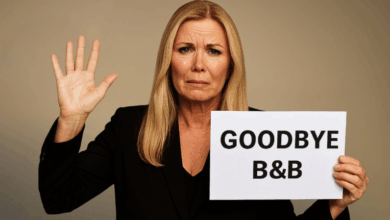
The Bold and The Beautiful Next 3 Weeks Spoilers: April 13 – May 1 | 2026

The story opens with a haunting reflection on the aftermath of Sheila Carter’s accidental death at Il Giardino, framing it not as simple drama but as a suffocating collapse of morality. The silence following the catastrophe feels heavy and inescapable, as if the air itself has been drained from the room. The viewer is left staring at the screen, overwhelmed by a sense of grief that extends beyond the characters themselves. This moment is not just a plot twist but a deeply unsettling portrayal of human failure and emotional paralysis. The narrative emphasizes how these characters remain trapped in cycles of trauma, unable to evolve despite the passage of time. Taylor Hayes, Deacon Sharpe, and Sheila Carter are all shown as individuals stuck in patterns they cannot escape. The apartment setting, dim and claustrophobic, mirrors the psychological confinement they experience. The lighting and atmosphere transform the space into something resembling a tomb, reinforcing the sense of inevitability. Sheila’s desperation is portrayed as something deeper than jealousy, rooted in a profound fear of abandonment. Her final moments reveal a tragic vulnerability, as her actions stem from emotional collapse rather than calculated evil.
As the confrontation unfolds, Sheila corners Taylor with a seemingly mundane weapon that becomes terrifying in context. The tension escalates as Taylor, despite her professional background as a psychiatrist, is reduced to pure fear in the face of violence. Her training and composure vanish, leaving her exposed and defenseless. When Deacon arrives, his intention is to protect, not harm, but the situation spirals beyond control. The struggle between them is chaotic and unrefined, lacking any sense of control or choreography. In a moment driven by instinct, Deacon pushes Sheila, leading to her fatal fall against the marble table. The impact is sudden and final, with no dramatic buildup or resolution, only silence. Sheila’s death is stripped of grandeur, reduced to a tragic and mundane accident. This stark realism makes the moment even more disturbing, as it highlights the fragility of life. Taylor immediately shifts into her medical instincts, attempting to find a pulse that is no longer there. The realization that Sheila is dead forces both Taylor and Deacon into a state of shock and disbelief.
The emotional weight of the situation quickly transforms into fear as Deacon realizes how the law will perceive the incident. His past as a criminal makes him certain that no one will believe it was an accident. He imagines a future where he is condemned for murder, regardless of the truth. This fear becomes the catalyst for the most critical decision in the story. Taylor, a woman defined by her commitment to truth and healing, faces an impossible moral dilemma. Instead of calling for help, she chooses to protect Deacon by helping him hide the body. This decision marks a profound shift in her identity, as she abandons her principles in a moment of desperation. The act of cleaning the scene becomes symbolic of their attempt to erase what has happened. However, their actions only deepen the psychological burden they now carry. The process of covering up the death transforms their relationship into one built on shared guilt. In trying to escape physical consequences, they trap themselves in a mental and emotional prison.
As the story progresses, the looming threat of discovery adds a layer of relentless tension. Sheila’s disappearance will inevitably raise questions, drawing attention from those who knew her. Chief Baker represents the slow but inevitable approach of justice, a force that cannot be avoided forever. The contrast between the dark events in the apartment and the brighter world outside highlights the surreal nature of the situation. While others continue their lives, Taylor and Deacon are consumed by their secret. Taylor, in particular, faces an internal conflict that threatens to destroy her sense of self. As someone who relies on honesty and emotional processing, she is now burdened with a truth she cannot reveal. The psychological toll begins to manifest as paranoia and fear, with Sheila’s presence lingering even in death. Their love, once a source of hope, becomes the very thing that binds them to their downfall. The story ends with a sense of inevitability, as guilt and consequences slowly close in on them. What remains is a chilling reminder that while time may seem to stand still, the weight of conscience never stops growing.