Ned Crashes Willow’s Trial! The Shocking Truth Stuns Everyone | General Hospital Spoilers
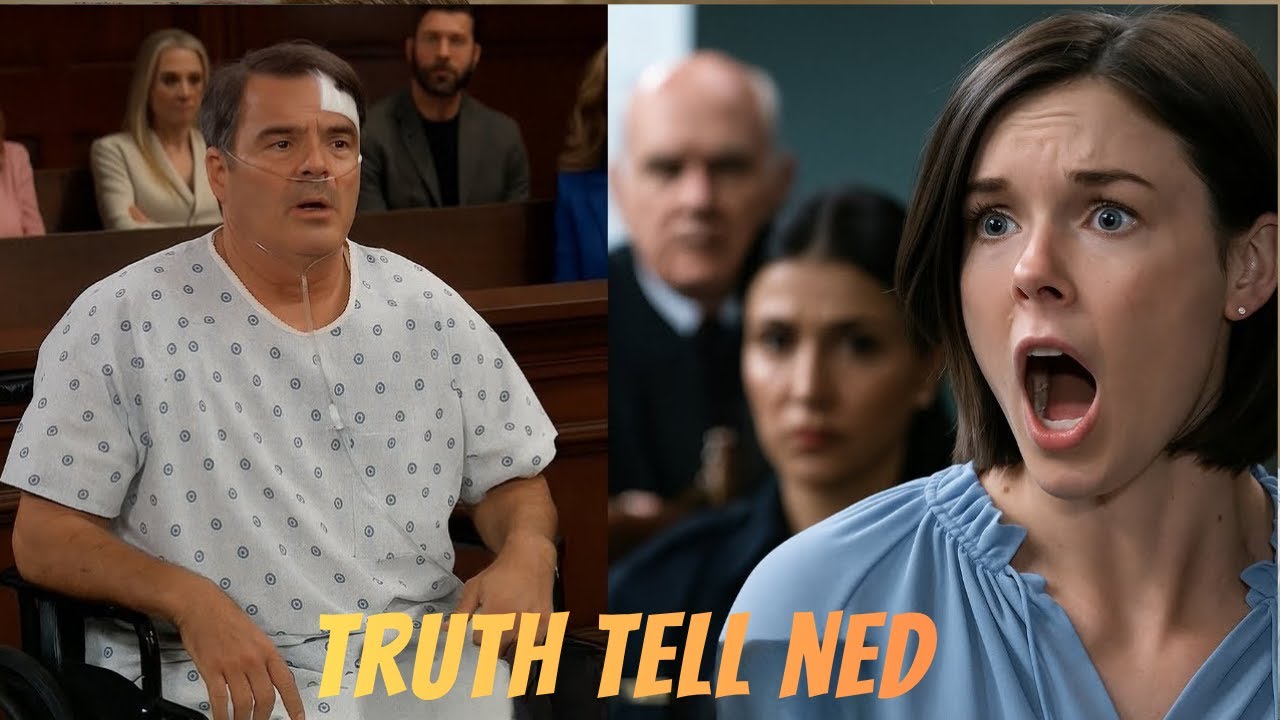
The courtroom was tense, filled with the heavy scent of polished wood and the silent anticipation of spectators as Willow Tate faced the prosecution’s case. The evidence against her painted a damning picture: heated arguments with her mother, Harmony Miller, financial transfers, and a history of tension. The prosecutor’s pacing and relentless delivery made every word feel like a trap, while Willow struggled to maintain composure. Her lawyer, Arthur Finch, objected when the prosecution twisted speculation into seeming fact, but the damage to perception had been done. Willow’s mind replayed her complicated relationship with Harmony, a mixture of love, frustration, and a desire to fix the unfixable. The jury saw her actions as suspicious, her fingerprints on Harmony’s apartment seemingly confirming opportunity. Despite these implications, there was no murder weapon or definitive forensic link, leaving the defense with a lifeline. During a recess, Willow drew comfort from her husband Michael’s presence, his faith in her anchoring her through the storm. Thoughts of her children, Wy and Amelia, weighed heavily, reminding her of what was at stake. She braced herself for the defense to rebuild her narrative and humanize her actions before the jury.
Willow took the stand, a risk meant to show the jury her humanity and dismantle the prosecution’s portrayal of a cold-blooded daughter. Arthur guided her through memories of her childhood, emphasizing the nuanced love and difficulties she shared with Harmony. He highlighted the financial transfers as payments for medical care and rehab, not sinister motives, while reinforcing her alibi for the night of Harmony’s death. The prosecution aggressively challenged her testimony, quoting diary entries and questioning suspicious financial activity, planting seeds of doubt about her motives. Every answer felt like it stripped her bare, and the courtroom seemed to close in as her love for her mother was reframed as potential malice. Character witnesses, including Michael, testified to her innocence and the lack of physical evidence tying her to the crime. Despite these defenses, the cross-examinations and implications were emotionally exhausting, leaving Willow feeling exposed and powerless. The defense relied on creating reasonable doubt through alibis, expert testimony on the absence of DNA or defensive wounds, and emphasizing the unknown murder weapon. Yet, the tension remained, with the prosecution skillfully highlighting contradictions and fostering skepticism. The trial became a battle not only of facts but of perception, weighing Willow’s lifelong relationship with her mother against circumstantial evidence.
On the fourth day of the defense, a surprise witness emerged: Ned Cordain, a prominent figure in Port Charles. His sudden appearance sent shockwaves through the courtroom, as neither Willow nor Michael had expected his involvement. Arthur argued for his relevance, claiming he possessed information capable of exonerating Willow. The judge reluctantly allowed Ned to testify, and the courtroom buzzed with anticipation as he approached the stand. Ned recounted an encounter with Harmony Miller, revealing her confessions of a past deception involving a stolen baby and an illegal adoption. Willow’s pulse raced as the story became personal: Harmony admitted the child she had stolen was Willow herself. Ned confirmed that Harmony had revealed the real mother’s identity, linking Willow’s biological parentage to Lisel Aubreck and implicating Tracy Cordain as the orchestrator. The courtroom erupted in stunned gasps as the magnitude of the revelation sank in. Willow’s life, built on a foundation of assumed truths, shattered instantly under the weight of this disclosure. The testimony reframed her identity, exposing decades of lies and manipulation orchestrated by Harmony and the Cordain family.
Ned continued, recounting the painful confrontation following Harmony’s confession, culminating in her tragic fall from a balcony. The vivid retelling emphasized the emotional turmoil and unintended consequences of years of deception. Willow struggled to absorb the enormity of her true origin: Harmony was not her mother, and she had been unknowingly caught in a web of lies and stolen identity. Michael remained by her side, providing physical and emotional support as the courtroom felt both suffocating and surreal. Every memory of Harmony—love, conflict, and dependence—reframed into a narrative of manipulation and tragedy. The revelation also cast new light on her entire relationship with her mother, explaining inconsistencies, possessiveness, and past heartbreak. Willow faced not only the legal battle but the profound personal upheaval of discovering her real parentage. The courtroom became a stage for unraveling decades of secrets, redefining relationships, and confronting the moral and emotional consequences of deception. By the end of Ned’s testimony, the audience and jury were left reeling, the lines between guilt and innocence blurred by the shock of truth, and Willow’s life irrevocably transformed.